Detection and Analysis of MOSH/MOAH Contamination in Edible Vegetable Oils: A Comprehensive Review
DOI:
https://doi.org/10.22452/mjs.vol44no4.10Keywords:
MOSH/MOAH, Edible vegetable oil, Contamination, LC-GC-FID, ChromatographyAbstract
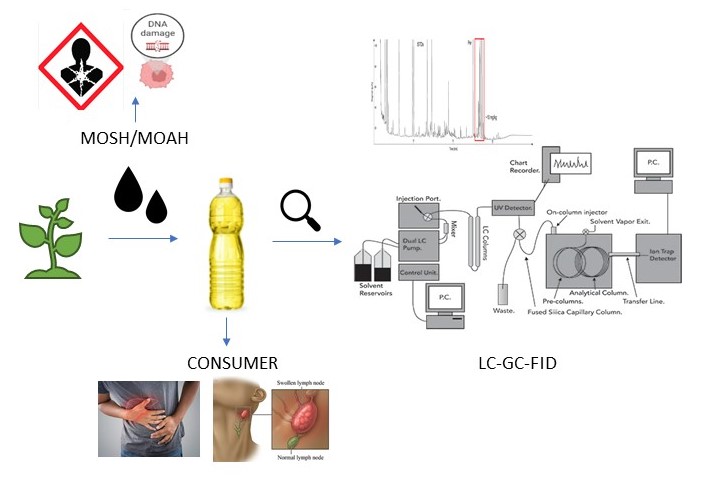
Consuming edible vegetable oil (EVO) is highly beneficial for human health due to its abundant nutrients, yet it might pose a risk if contaminated. Common pollutants such as mycotoxins, pesticides, heavy metals, and mineral oil will likely occur during harvesting, industrial processing, and environmental pathways. This review focuses on mineral oil, a type of petrogenic pollutant that can be further classified into two subgroups: mineral oil saturated hydrocarbon (MOSH) and mineral oil aromatic hydrocarbon (MOAH). Due to its significant consumption, exposure to MOSH/MOAH in EVO has a detrimental impact on human health, to the point that both subgroups are considered hazardous. Indeed, MOSH can bioaccumulate in certain organs, and certain MOAH compounds have a strong potential to cause cancer. The European Food Safety Association (EFSA) has established standards for vegetable oil, updated in 2022, which provide a maximum limit of 13 mg MOSH/kg and 0.5 mg MOAH/kg. Additionally, a pragmatic monitoring method is implemented, including identifying and evaluating MOSH/MOAH presence in the specific matrix using analytical techniques that can accurately measure their quantities. Despite the existence of various techniques, the Liquid Chromatography–Gas Chromatography-Flame Ionisation Detector (LC-GC-FID) technique stands out for its adaptability, efficiency, sensitivity, and excellent reproducibility, even in the presence of complicated matrix and analyte. Therefore, this study comprehensively explains the operating principle, sample preparation, column selection, and assessment results. Various advanced techniques were employed to detect, measure, and distinguish individual MOSH/MOAH structures. These methods involved using additional instruments; in certain instances, innovative approaches were also implemented. In this review, the focus is on elucidating the presence of MOSH/MOAH contamination in EVO and delving into the LC-GC-FID method, the prevailing approach for quantification, with a comprehensive exploration of its intricacies.
References
Ahmad, H., Noor, A.M., Sabri, M.P.A., Ngteni, R. & Syed Hilmi, S.M.H. 2019. Mineral oil saturated hydrocarbon in crude palm oil-current status in Sime Darby palm oil mills. Journal of Advanced Agricultural Technologies 6(4): 299–303.
Albendea, P., Conchione, C., Menegoz Ursol, L. & Moret, S. 2024. A Study on Mineral Oil Hydrocarbons (MOH) Contamination in Pig Diets and Its Transfer to Back Fat and Loin Tissues. Animals 14(10): 1–16.
Ali, F. & Neha, K. 2024. HPLC and LC ‑ MS in Analysis of Edible Oils and Fats. In Ahamad, J. & Nollet, L. M. L. (ed.). Bioactive Compounds of Edible Oils and Fats, pages 234–242. First Edit. Taylor & Francis Group.:
Andriukaitis, V. 2017. Commission Recommendation (EU) 2017/84: The monitoring of mineral oil hydrocarbons in food and in materials and articles intended to come into contact with food. Official Journal of the European Union, page.
Apedo, A. & Snow, N.H. 2019. Online LC–GC: The Ultimate “GC Connection.” https://www.chromatographyonline.com/view/online-lc-gc-ultimate-gc-connection-0 [15 October 2023].
Bauwens, G., Pantó, S. & Purcaro, G. 2021. Mineral oil saturated and aromatic hydrocarbons quantification: Mono- and two-dimensional approaches. Journal of Chromatography A 1643(462044): 1–9.
Biedermann, M., Eicher, A., Altherr, T. & McCombie, G. 2022. Quantification of mineral oil aromatic hydrocarbons by number of aromatic rings via comprehensive two-dimensional gas chromatography: First results in food. Journal of Chromatography Open 2 100072: 1–14.
Biedermann, M., Fiselier, K. & Grob, K. 2009. Aromatic hydrocarbons of mineral oil origin in foods : method for determining the total concentration and first results. Journal of Agricultural and Food Chemistry 57: 8711–8721.
Biedermann, M. & Grob, K. 2009. Comprehensive two-dimensional GC after HPLC preseparation for the characterization of aromatic hydrocarbons of mineral oil origin in contaminated sunflower oil. Journal of Separation Science 32: 3726–3737.
Biedermann, M. & Grob, K. 2015. Comprehensive two-dimensional gas chromatography for characterizing mineral oils in foods and distinguishing them from synthetic hydrocarbons. Journal of Chromatography A 1375: 146–153.
Biedermann, M., Uematsu, Y. & Grob, K. 2011. Mineral oil contents in paper and board recycled to paperboard for food packaging. Packaging Technology and Science 24: 61–73.
Biopharma. (n.d.). The Ames test or bacterial reverse mutation test. https://www.eurofins.com.au/biopharma-services/genetic-toxicology/the-ames-test [16 July 2023].
Boogaard, P., Hedelin, A., Riley, A., Rushton, E. & Vaissiere, M. 2012. Use of the modified Ames test as an indicator of the carcinogenicity of residual aromatic extracts. Brussels.
Bratinova, S., Hoekstra, E., Emons, H., Hutzler, C., Kappenstein, O., Biedermann, M. & McCombie, G. 2020. The reliability of MOSH/MOAH data: a comment on a recently published article. Journal of Consumer Protection and Food Safety 15(3): 285–287.
Buijtenhuijs, D. & Van de Ven, B.M. 2019. Mineral Oils in food ; a review of occurrence and sources. Bilthoven.
Bunaciu, A.A., Fleschin, S. & Aboul-enein, H.Y. 2022. Determination of some edible oils adulteration with paraffin oil using infrared spectroscopy. Pharmacia 69(3): 827–832.
Cardoso, C.A.L., Caramão, E.B., de Castro, T.L.A. & Simionatto, E. 2023. Variation in the chemical composition of essential oils from Mangifera indica L. leaves by comprehensive two-dimensional gas chromatography. Ecletica Quimica 48(4): 27–36.
Carrillo, J.-C., Shen, H., Momin, F., Kral, O., Schnieder, H. & Kuhn, S. 2022. GTL synthetic paraffin oil shows low liver and tissue retention compared to mineral oil. Food and Chemical Toxicology 159: 112701.
Carrillo, J.C., van der Wiel, A., Danneels, D., Kral, O. & Boogaard, P.J. 2019. The selective determination of potentially carcinogenic polycyclic aromatic compounds in lubricant base oils by the DMSO extraction method IP346 and its correlation to mouse skin painting carcinogenicity assays. Regulatory Toxicology and Pharmacology 106: 316–333.
EFSA. 2012. Scientific opinion on mineral oil hydrocarbons in food. EFSA Journal, page.
EFSA, Arcella, D., Baert, K. & Binaglia, M. 2019. Rapid risk assessment on the possible risk for public health due to the contamination of infant formula and follow‐on formula by mineral oil aromatic hydrocarbons (MOAH). EFSA Supporting Publications, page.
EFSA Panel, Schrenk, D., Bignami, M., Bodin, L., del Mazo, J., Grasl-Kraupp, B., Hogstrand, C., Hoogenboom, L., Leblanc, J.C., Nebbia, C.S., Nielsen, E., Ntzani, E., Petersen, A., Sand, S., Schwerdtle, T., Vleminckx, C., Wallace, H., Alexander, J., Goldbeck, C., Grob, K., Gómez Ruiz, J.Á., Mosbach-Schulz, O., Binaglia, M. & Chipman, J.K. 2023. Update of the risk assessment of mineral oil hydrocarbons in food. EFSA Journal 21(9): 1–143.
European Commission. 2022. Standing committee on plants, animals, food and feed section novel food and toxicological safety of the food chain.
Fang, X., Chen, Y., Gao, J., Run, Z., Chen, H., Shi, R., Li, Y., Zhang, H. & Liu, Y. 2023. Application of GC–TOF/MS and GC×GC–TOF/MS to Discriminate Coffee Products in Three States (Bean, Powder, and Brew). Foods 12(3123): 1–12.
Fengler, R. & Gruber, L. 2022. Migration of mineral oil hydrocarbons from contaminated paperboard into the food simulants Tenax and Sorb-Star—A comparison. Packaging Technology and Science: 603–620.
Finch, A., Eilers, G. & Harzke, F. 2006. Masking from mineral oil smell and scenting from mineral oils. Bremen (DE).
Fiorini, D., Paciaroni, A., Gigli, F. & Ballini, R. 2010. A versatile splitless injection GC-FID method for the determination of mineral oil paraffins in vegetable oils and dried fruit. Food Control 21: 1155–1160.
Fiselier, K. & Grob, K. 2009. Determination of mineral oil paraffins in foods by on-line HPLC – GC – FID : lowered detection limit ; contamination of sunflower seeds and oils. European Food Research and Technology 229: 679–688.
Flinn, R.A., Kehl, W.L., Schmid, B.K. & Stewart, M.M. 1965. Hydrogenation of mineral oils in the presence of amenor amount of a hydrogenating catalyst and a major amount of specific type of activated alumina.
Foodwatch. 2021. International tests of various food products for their contamination by mineral oil hydrocarbons (MOSH/MOAH).
Gamble, K.R. & Smith, D.W. 2009. Discrimination of ‘“ Odorless ”’ Mineral Oils Alone and as Diluents by Behaviorally Trained Mice. Chemical Senses 34: 559–563.
García-Cicourel, A.R., van de Velde, B., Roskam, G. & Janssen, H.-G. 2020. Supercritical fluid chromatography as a rapid single-step method for the determination of mineral oil saturated and aromatic hydrocarbons in purified mineral oils for food and cosmetics applications. Journal of Chromatography A 1614: 460713.
García-Cicourel, A.R., van de Velde, B., Verduin, J. & Janssen, H.G. 2019. Comprehensive off-line silver phase liquid chromatography x gas chromatography with flame ionization and vacuum ultraviolet detection for the detailed characterization of mineral oil aromatic hydrocarbons. Journal of Chromatography A 1607: 460391.
Gharbi, I., Moret, S., Chaari, O., Issaoui, M., Conte, L.S., Lucci, P. & Hammami, M. 2016. Evaluation of hydrocarbon contaminants in olives and virgin olive oils from Tunisia. Food Control, page. Elsevier Ltd.:
Gómez-Coca, R.B., Cert, R., Pérez-Camino, M.C. & Moreda, W. 2016. Determination of saturated aliphatic hydrocarbons in vegetable oils. Grasas Y Aceites 67(2): e127.
Hochegger, A., Moret, S., Geurts, L., Gude, T., Leitner, E., Mertens, B., O’Hagan, S., Poças, F., Simat, T.J. & Purcaro, G. 2021. Mineral oil risk assessment: knowledge gaps and roadmap. Outcome of a multi-stakeholders workshop. Trends in Food Science and Technology 113: 151–166.
Hochegger, A., Wagenhofer, R., Savic, S., Mayrhofer, E., Washuttl, M. & Leitner, E. 2022. Combination of multidimensional instrumental analysis and the Ames test for the toxicological evaluation of mineral oil aromatic hydrocarbons. Journal of Agricultural and Food Chemistry 70: 16401–16409.
Hoekstra, E., Bratinova, S. & (Editors). 2019. Guidance on sampling , analysis and data reporting for the monitoring of mineral oil hydrocarbons in food and food contact materials. Luxembourg.
IARC. 2012. Mineral oils, untreated or mildly treated: Evaluation of carcinogenic risks to humans, No. 100F. IARC Monographs: 179–196.
Institute for Publication. (n.d.). Mineral oil hydrocarbons MOSH / MOAH. Berlin.
Isola, A., Carrillo, J., Lemaire, P., Niemela, H. & Steneholm, A. 2023. Lack of human-relevant adversity of MOSH retained in tissues : Analysis of adversity and implications for regulatory assessment. Regulatory Toxicology and Pharmacology 137: 105284.
Jaén, J., Domeño, C., Alfaro, P. & Nerín, C. 2021. Atmospheric Solids Analysis Probe (ASAP) and Atmospheric Pressure Gas Chromatography (APGC) coupled to Quadrupole Time of Flight Mass Spectrometry (QTOF-MS) as alternative techniques to trace aromatic markers of mineral oils in food packaging. Talanta 227: 1–9.
Jaén, J., Domeño, C. & Nerín, C. 2022a. Development of an analytical method for the determination of mineral oil aromatic hydrocarbons (MOAH) from printing inks in food packaging. Food Chemistry 397: 1–9.
Jaén, J., Domeño, C. & Nerín, C. 2022b. Development of an analytical method for the determination of mineral oil aromatic hydrocarbons (MOAH) from printing inks in food packaging. Food Chemistry 397.
Jin, H. 2015. Dielectric strength and thermal conductivity of mineral oil based nanofluids. Delft Ubinersity of Technology, Netherlands,.
Jin, H., Andritsch, T., Tsekmes, I.A., Kochetov, R., Morshuis, P.H.F. & Smit, J.J. 2014. Properties of mineral oil based silica nanofluids. IEEE Transactions on Dielectrics and Electrical Insulation 21(3): 1100–1108.
Klaus, E.E., Tewksbury, E.J. & Fenske, M.R. 1962. Preparation , properties , and some applications of super-refined mineral oils. ASLE Transactions 5(1): 115–125.
Kojic, B.D., Dugic, P., Tatjana, B. & Dugic, G. 2019. Influence of the primary and secondary oxidation inhibors on the oxidation stability of the mineral base oils. 16th International Conference on Tribology Serbiatrib ’19, page 573–581.
Lachenmeier, D.W., Mildau, G., Krause, A., Marx, G., Walch, S.G., Hartwig, A. & Kuballa, T. 2017a. Evaluation of mineral oil saturated hydrocarbons (MOSH) and mineral oil aromatic hydrocarbons (MOAH) in pure mineral hydrocarbon-based cosmetics and cosmetic raw materials using 1H NMR spectroscopy [version 1; referees: 2 approved, 1 approved with reserva. F1000Research 6: 682.
Lachenmeier, D.W., Mildau, G., Krause, A., Marx, G., Walch, S.G., Hartwig, A. & Kuballa, T. 2017b. Evaluation of mineral oil saturated hydrocarbons (MOSH) and mineral oil aromatic hydrocarbons (MOAH) in pure mineral hydrocarbon-based cosmetics and cosmetic raw materials using 1H NMR spectroscopy. F1000Research 6.
Liao, R., Hao, J., Chen, G., Ma, Z. & Yang, L. 2011. A comparative study of physicochemical, dielectric and thermal properties of pressboard insulation impregnated with natural ester and mneral oil. IEEE Transactions on Dielectrics and Electrical Insulation 18(5): 1626–1637.
Liu, L., Huang, H., Wu, Y., Li, B. & Ouyang, J. 2017. Offline solid-phase extraction large-volume injection-Gas chromatography for the analysis of mineral oil-saturated Hydrocarbons in commercial vegetable oils. Journal of Oleo Science: 1–10.
Lommatzsch, M., Biedermann, M., Grob, K. & Simat, T.J. 2016. Analysis of saturated and aromatic hydrocarbons migrating from a polyolefin-based hot-melt adhesive into food. Food Additives and Contaminants - Part A: 473–488.
Lorenzini, R., Biedermann, M., Grob, K., Garbini, D., Barbanera, M. & Braschi, I. 2013. Migration kinetics of mineral oil hydrocarbons from recycled paperboard to dry food : monitoring of two real cases. Food Additives & Contaminants: Part A 30(4): 760–770.
Lorenzini, R., Fiselier, K., Biedermann, M., Barbanera, M., Braschi, I. & Grob, K. 2010. Saturated and aromatic mineral oil hydrocarbons from paperboard food packaging: estimation of long-term migration from contents in the paperboard and data on boxes from the market. Food Additives and Contaminants 27(12): 1765–1774.
Martin, D. 2008. Evaluation of the dielectric capability of ester based oils for power transformers based oils for power transformers. The University of Manchester,.
Matheson, A. 2023. A Modern Mineral Oil Hydrocarbon Analysis. https://doi.org/10.56530/lcgc.eu.do5379f3.
Moret, S., Scolaro, M., Barp, L., Purcaro, G. & Conte, L.S. 2016. Microwave assisted saponification (MAS) followed by on-line liquid chromatography (LC)-gas chromatography (GC) for high-throughput and high-sensitivity determination of mineral oil in different cereal-based foodstuffs. Food Chemistry 196: 50–57.
Müller, A., Jovalekic, M. & Tenbohlen, S. 2012. Solubility study of different gases in mineral and ester-based transformer oils. 2012 IEEE International Conference on Condition Monitoring and Diagnosis, page 937–940. Bali.
Nestola, M. 2022. Automated workflow utilizing saponification and improved epoxidation for the sensitive determination of mineral oil saturated and aromatic hydrocarbons in edible oils and fats. Journal of Chromatography A 1682: 463523.
Oellig, C. & Schwack, W. 2011. Planar solid phase extraction — A new clean-up concept in multi-residue analysis of pesticides by liquid chromatography – mass spectrometry. Journal of Chromatography A 1218: 6540–6547.
Oellig, C. & Schwack, W. 2014. Planar solid phase extraction clean-up and microliter-flow injection analysis – time-of-flight mass spectrometry for multi-residue screening of pesticides in food. Journal of Chromatography A 1351: 1–11.
Oppermann, U. & Leitner, E. 2017. Non-intentionally added substances in food and food contact materials - determination of mineral oil hydrocarbons by LC-GC Technique.
Otunga, G.N., Maiyoh, G.K., Macharia, B.N. & Tuei, V.C. 2019. Transformer mineral oil ingestion induces systemic sub-acute toxicity in Wistar rats. Heliyon 5: e02998.
Parkinson, L. 2022. EC sets limit on MOAH in foods. https://www.foodpackagingforum.org/news/ec-sets-limit-on-moah-in-foods [15 August 2023].
Patel, A., Guo, H. & Iglesias, P. 2018. Study of the lubricating ability of protic ionic liquid on an aluminium-steel contact. Lubricants 6(66): 1–13.
Pirow, R., Blume, A., Hellwig, N., Herzler, M., Huhse, B., Hutzler, C., Pfaff, K., Thierse, H.J., Tralau, T., Vieth, B. & Luch, A. 2019. Mineral oil in food, cosmetic products, and in products regulated by other legislations. Taylor and Francis Ltd.:
Polyakova, A., van Leeuwen, S. & Peters, R. 2022. Review on chromatographic and specific detection methodologies for unravelling the complexity of MOAH in foods. Analytica Chimica Acta 1234: 340098.
Purcaro, G. (n.d.). Excutive Summary : Main Sources of Moh Contamination and Entry Points Into the Cocoa Supply Chain. Gembloux.
Purcaro, G., Tranchida, P.Q., Barp, L., Moret, S., Conte, L.S. & Mondello, L. 2013. Detailed elucidation of hydrocarbon contamination in food products by using solid-phase extraction and comprehensive gas chromatography with dual detection. Analytica Chimica Acta 773: 97–104.
Rausch, M.K., Erikson, H., Tollefsen, G.E. & Kelly, T.W. 1981. White mineral oil made by two stage hydrogenation. United States.
Rawlings, A. V & Lombard, K.J. 2012. A review on the extensive skin benefits of mineral oil. International Journal of Cosmetic Science 34: 511–518.
Rossum, V., Gijsbertus & Johannes. 2022. Removal of unwanted mineral oil hydrocarbons.
Rouabeh, J., M’barki, L., Hammami, A., Jallouli, I. & Driss, A. 2019. Studies of different types of insulating oils and their mixtures as an alternative to mineral oil for cooling power transformers. Heliyon 5: e01159.
Ruiz, J.L.H., Liébanas, J.A., Vidal, J.L.M., Frenich, A.G. & González, R.R. 2021. Offline solid-phase extraction and separation of mineral oil saturated hydrocarbons and mineral oil aromatic hydrocarbons in edible oils, and analysis via gc with a flame ionization detector. Foods 10: 2026.
Sabrina, M. & Giorgia, P. 2022. Mineral Oil in food: State of the art. https://foodsafety4.eu/knowledge/articles/mineral-oil-in-food-state-of-the-art/.
Sdrigotti, N., Collard, M. & Purcaro, G. 2021. Evolution of hyphenated techniques for mineral oil analysis in food. Journal of Separation Science 44(1): 464–482.
Spohner, M. 2017. Study of dielectric properties of mineral oils and natural oils and methyl esters of natural oils. 19th IEEE International Conference on Dielectric Liquids, ICDL 2017, page 1–4. Manchester, United Kingdom.
Srbinovska, A., Conchione, C., Lucci, P. & Moret, S. 2020. On-Line HP(LC)-GC-FID determination of hydrocarbon contaminants in fresh and packaged fish and fish products. Journal of AOAC International 0(0): 1–7.
Suwarno & Darma, I.S. 2008. Dielectric properties of mixtures between mineral oil and natural ester from palm oil. WSEAS Transactions and Power Systems 3(2): 37–46.
Toudja, T., Moulai, H., Nacer, A., Beldjilali, A., Khelfane, I. & Debche, A. 2014. Moisture and electrical discharges effect on naphthenic mineral oil properties. IET Science, Measurement and Technology 8(6): 588–594.
Tuei, V.C. 2023. Availability of vegetable edible oils and potential health implications in Kenya. Open Access Library Journal 10: e9756.
United States Pharmacopeial Convention. 2014. Safety data sheet : Mineral Oil. United States.
Wagner, M. & Oellig, C. 2019. Screening for mineral oil saturated and aromatic hydrocarbons in paper and cardboard directly by planar solid phase extraction and by its coupling to gas chromatography. Journal of Chromatography A 1588: 48–57.
Walaszek, Z., Hanausek, M. & Slaga, T.J. 2007. The role of skin painting in predicting lung cancer. International Journal of Toxicology 26: 345–351.
Weber, S., Schmidt, T., Schumacher, P., Kuballa, T., Mildau, G., Walch, S.G., Hartwig, A. & Lachenmeier, D.W. 2019. Quantification of mineral oil aromatic hydrocarbons (MOAH) in anhydrous cosmetics using 1H NMR. Journal of Chemistry: 10.
Weber, S., Schrag, K., Mildau, G., Kuballa, T., Walch, S.G. & Lachenmeier, D.W. 2018. Analytical methods for the determination of mineral oil saturated hydrocarbons (MOSH) and mineral oil aromatic hydrocarbons (MOAH)—A short review. Analytical Chemistry Insights 13: 1–16.
Wright, J. (n.d.). The fundamentals of mineral base oil refining. https://www.machinerylubrication.com/Read/28960/mineral-oil-refining [14 July 2023].
Wrona, M., Pezo, D. & Nerin, C. 2013. Rapid analytical procedure for determination of mineral oils in edible oil by GC-FID. Food Chemistry 141: 3993–3999.
Yuliastuti, E. 2010. Analysis of dielectric properties comparison between mineral oil and synthetic ester oil. Delft University of Technology,.
Zoccali, M., Barp, L., Beccaria, M., Sciarrone, D., Purcaro, G. & Mondello, L. 2016. Improvement of mineral oil saturated and aromatic hydrocarbons determination in edible oil by liquid-liquid-gas chromatography with dual detection. Journal of Separation Science 39: 623–631.
Downloads
Published
Issue
Section
License
Copyright (c) 2025 Malaysian Journal of Science

This work is licensed under a Creative Commons Attribution-NonCommercial 4.0 International License.
Transfer of Copyrights
- In the event of publication of the manuscript entitled [INSERT MANUSCRIPT TITLE AND REF NO.] in the Malaysian Journal of Science, I hereby transfer copyrights of the manuscript title, abstract and contents to the Malaysian Journal of Science and the Faculty of Science, University of Malaya (as the publisher) for the full legal term of copyright and any renewals thereof throughout the world in any format, and any media for communication.
Conditions of Publication
- I hereby state that this manuscript to be published is an original work, unpublished in any form prior and I have obtained the necessary permission for the reproduction (or am the owner) of any images, illustrations, tables, charts, figures, maps, photographs and other visual materials of whom the copyrights is owned by a third party.
- This manuscript contains no statements that are contradictory to the relevant local and international laws or that infringes on the rights of others.
- I agree to indemnify the Malaysian Journal of Science and the Faculty of Science, University of Malaya (as the publisher) in the event of any claims that arise in regards to the above conditions and assume full liability on the published manuscript.
Reviewer’s Responsibilities
- Reviewers must treat the manuscripts received for reviewing process as confidential. It must not be shown or discussed with others without the authorization from the editor of MJS.
- Reviewers assigned must not have conflicts of interest with respect to the original work, the authors of the article or the research funding.
- Reviewers should judge or evaluate the manuscripts objective as possible. The feedback from the reviewers should be express clearly with supporting arguments.
- If the assigned reviewer considers themselves not able to complete the review of the manuscript, they must communicate with the editor, so that the manuscript could be sent to another suitable reviewer.
Copyright: Rights of the Author(s)
- Effective 2007, it will become the policy of the Malaysian Journal of Science (published by the Faculty of Science, University of Malaya) to obtain copyrights of all manuscripts published. This is to facilitate:
- Protection against copyright infringement of the manuscript through copyright breaches or piracy.
- Timely handling of reproduction requests from authorized third parties that are addressed directly to the Faculty of Science, University of Malaya.
- As the author, you may publish the fore-mentioned manuscript, whole or any part thereof, provided acknowledgement regarding copyright notice and reference to first publication in the Malaysian Journal of Science and Faculty of Science, University of Malaya (as the publishers) are given. You may produce copies of your manuscript, whole or any part thereof, for teaching purposes or to be provided, on individual basis, to fellow researchers.
- You may include the fore-mentioned manuscript, whole or any part thereof, electronically on a secure network at your affiliated institution, provided acknowledgement regarding copyright notice and reference to first publication in the Malaysian Journal of Science and Faculty of Science, University of Malaya (as the publishers) are given.
- You may include the fore-mentioned manuscript, whole or any part thereof, on the World Wide Web, provided acknowledgement regarding copyright notice and reference to first publication in the Malaysian Journal of Science and Faculty of Science, University of Malaya (as the publishers) are given.
- In the event that your manuscript, whole or any part thereof, has been requested to be reproduced, for any purpose or in any form approved by the Malaysian Journal of Science and Faculty of Science, University of Malaya (as the publishers), you will be informed. It is requested that any changes to your contact details (especially e-mail addresses) are made known.
Copyright: Role and responsibility of the Author(s)
- In the event of the manuscript to be published in the Malaysian Journal of Science contains materials copyrighted to others prior, it is the responsibility of current author(s) to obtain written permission from the copyright owner or owners.
- This written permission should be submitted with the proof-copy of the manuscript to be published in the Malaysian Journal of Science
Licensing Policy
Malaysian Journal of Science is an open-access journal that follows the Creative Commons Attribution-Non-commercial 4.0 International License (CC BY-NC 4.0)
CC BY – NC 4.0: Under this licence, the reusers to distribute, remix, alter, and build upon the content in any media or format for non-commercial purposes only, as long as proper acknowledgement is given to the authors of the original work. Please take the time to read the whole licence agreement (https://creativecommons.org/licenses/by-nc/4.0/legalcode ).