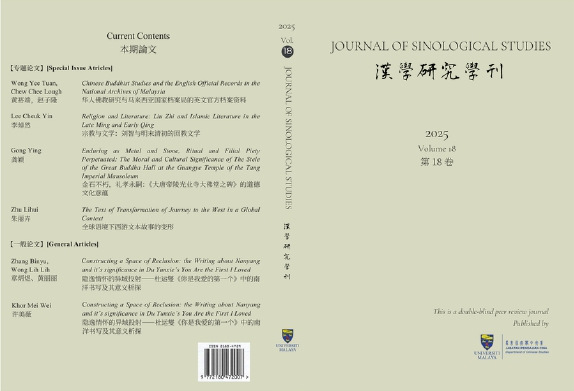
宗教与文学:刘智与明末清初的回教文学
Keywords:
明末清初, 回教, 刘智, 宗教文学, 五更月, Late Ming and early Qing dynasties, Islam, Liu Zhi, Religious Literature, Five Watches MoonAbstract
明末清初出现了一批精通汉文而又对儒家思想认识深厚的回教学者,他们用中文书写,用中文译解《古兰经》原文,弘扬回教教义。他们的著作对回教教义的传播与儒家思想的汇通,产生了深远的影响。日本学者桑田六郎称这批作者为“回儒”,晚明为 “中国回回史上之文艺复兴时期”。同时,明末清初南京地区的回教汉文译经活动,标志着中国回教发展史上,一个崭新阶段。当时汉文译著的作品范围非常广泛,举凡回教教义、历史、人物传记、典礼制度、民生习俗、语言文字等各方面的内容都有涉及,因而对回教宗教文学的发展也得以推广。本文一方面讨论什么是宗教文学,另一方面阐述回教的文学作品,并以刘智的《五更月》为例,帮助了解明末清初回教宗教文学的特色。
In the late Ming and early Qing dynasties, a group of Muslims who were proficient in Chinese and had a deep understanding of Confucianism wrote in Chinese and promoted Islam teachings. Their writings had a profound impact on the spread of Islam teachings and the convergence of Confucianism. The Japanese scholar Rokuro Kuwata called these authors "Hui Confucians" and the late Ming Dynasty "the Renaissance period in the history of Hui Hui in China". At the same time, the translation and writing of Islam scriptures in Nanjing in the late Ming and early Qing dynasties marked a new era in the history of the development of Islam in China. At that time, the scope of Chinese translations included Islam doctrines, history, biographies, ceremonial systems, people's customs, language and writing, and other aspects, so the development of Islamic religious literature was also promoted. On the one hand, this article discusses what is religious literature, and on the other hand, expounds the literary works of Islam, and takes Liu Zhi's "Five Watches Moon" as an example to discuss the characteristics of Islamic religious literature.